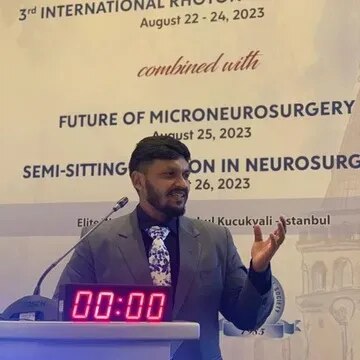
Dr. Rushabh Chheda - Best Neurosurgeon in Mahim, Mumbai | Fortis SL Raheja Hospital, Mahim, Mumbai.
1. M.B.B.S. - Smt Kashibai Navale Medical College And General Hospital , Pune
2. M.S. Gen Surgery (Gold medal🥇 )- Gajra Raja Medical College and General Hospital, Gwalior
3. M.Ch Neurosurgery- Lokmanya Tilak medical college and Sion Hospital
4. Fellowship in Cerebrovascular surgery- Universitätsspital Zürich
5. Post Doctoral Fellow- Neurocritical care and Endoscopic Brain and spine surgery- SGPGI , Lucknow
6. International Clincal Fellow- Endovascular Neurosurgery and interventional therapy for neurovascular disorders- Kameda Medical Centre- Japan
Speciality - Neurovascular disorder like aneurysm, AVM AND dural fistulas, stroke and mechanical thrombectomy, neurooncology
Spine disorder, Endoscopic spine surgery , spinal dysraphism, paediatric neurooncology, complex spine trauma and fractures, brain trauma, endoscopic skull base surgery , carpal tunnel disorder,